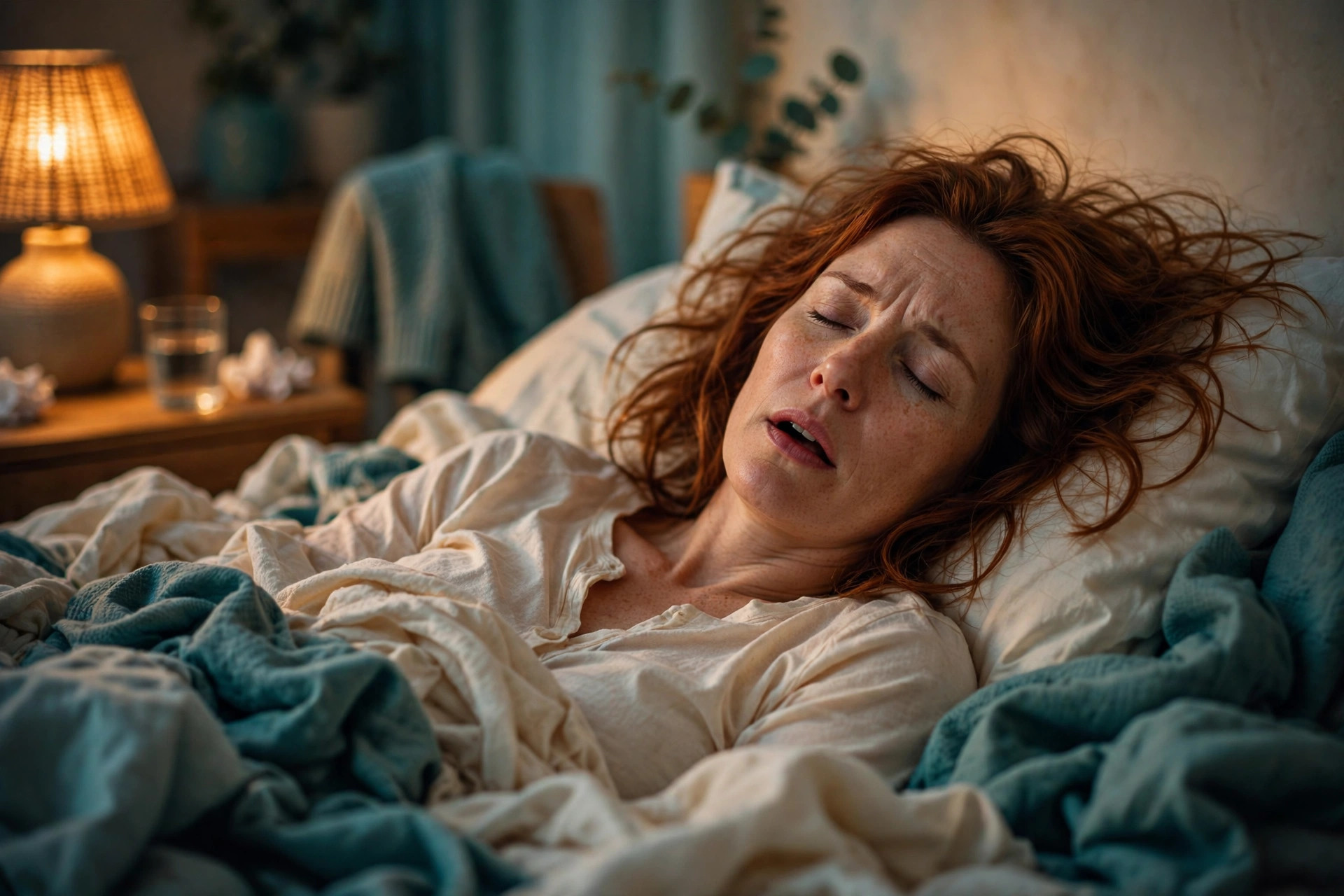
Fibromyalgia and Sleep Apnoea: 7 Signs Hiding in Your Snoring
If you live with fibromyalgia and sleep apnoea, your nights contain an event you never witness: your airway closes, your oxygen dips, your brain hauls you half-awake to breathe, and this repeats ten, thirty, sometimes sixty times an hour until morning. You experience it only as its evidence: the wrecked sleep, the morning headache, the fatigue that eight hours never touches.
Sleep apnoea, repeated pauses in breathing during sleep caused by a collapsing airway, is significantly more common in fibromyalgia than in the general population, and it is the great impersonator’s favourite disguise. Its symptoms, unrefreshing sleep, exhaustion, morning pain and fog, are precisely fibromyalgia’s symptoms, so the two hide inside each other for years while a treatable condition goes untreated.
This guide explains how fibromyalgia and sleep apnoea connect. First, you will learn the seven signs that separate apnoea from ordinary fibromyalgia sleep. Next, you will find what diagnosis and treatment actually look like. Finally, you will learn why this is the one sleep problem on this site that should never be self-managed indefinitely.
Table of Contents
- Why Fibromyalgia and Sleep Apnoea Come Together
- 7 Signs Your Snoring Is More Than Snoring
- What It Feels Like Day to Day
- Fibromyalgia and Sleep Apnoea: Diagnosis and Treatment
- Why This One Cannot Just Be Lived With
- Quick Questions
Why Fibromyalgia and Sleep Apnoea Come Together
The overlap is mechanical and chemical at once, which is why fibromyalgia and sleep apnoea are so often found sharing a bed. Mechanically, the fibromyalgia population carries the classic apnoea risk profile in bulk: middle age, weight gained through pain-limited movement, and necks and jaws whose structure crowds the airway. Chemically, sedating medicines, alcohol used as a sleep aid, and the shallow, fragmented architecture of fibromyalgia sleep all relax airway tone further and turn borderline airways into closing ones.
Menopause moves the goalposts for women, who form the majority of this condition’s population. Airway protection from female hormones fades, fat distribution shifts towards the neck and abdomen, and apnoea rates in women climb steeply towards men’s in the postmenopausal years, while the symptom costume stays feminine: insomnia, fatigue, morning headaches. A woman whose sleep disintegrated at fifty-two alongside her fibromyalgia is a textbook late diagnosis waiting for someone to order one simple test.
The consequences then pour directly into fibromyalgia’s core machinery. Every apnoea ends in a micro-arousal, and micro-arousals are the vandals of deep sleep, the stage where muscles repair and pain thresholds reset. Our guide to fibromyalgia and sleep maps that architecture; apnoea is what happens when the vandals get power tools. Oxygen dips add their own pain amplification and morning headaches, and the vivid, fractured dreaming of our fibromyalgia and vivid dreams guide is often apnoea’s rebound signature in the night’s second half.
The teeth tell the story too. Apnoea and night-time grinding travel together so reliably that our fibromyalgia and teeth grinding guide lists apnoea among its red flags, and dentists, who see the wear, are frequently the first professionals to raise the sleep question. If three different articles on this site keep pointing at the same hidden condition, that is because in clinic, it keeps being the answer.
7 Signs Your Snoring Is More Than Snoring
Most people with fibromyalgia and sleep apnoea show several of these. Any two together justify the conversation. In fibromyalgia and sleep apnoea, witnesses outrank feelings as evidence:
1. Witnessed pauses. A partner reports that your breathing stops, sometimes for ten seconds or more, then restarts with a snort or gasp. This is the signature sign and it needs no technology to detect, only a witness who mentions it.
2. Loud, nightly snoring. Not the occasional cold-related snore: structural, most nights, often audible through a door, and frequently worse on your back.
3. Morning headaches and a dry, sore mouth. The overnight oxygen pattern and mouth breathing leave their calling cards at the exact hour fibromyalgia also claims, which is how the disguise holds.
4. Sleep that never refreshes, at any length. Nine hours that feel like four. Apnoea sleep is long and useless, because its depth is shredded hundreds of times.
5. Night-time bathroom trips and sweats. Repeated waking to urinate, and sweating out of proportion to the room, both travel with apnoea’s strain on the system.
6. Daytime sleepiness with edges. Nodding in meetings, in front of television, and, the serious version, fighting sleep at the wheel. Sleepiness that endangers driving is a same-week conversation, not a someday one.
7. A partner exiled to the spare room. Count it as data. When the snoring reorganises a household’s sleeping geography, the airway has been voting for years.
Notice what is absent from that list: a single mention of how the sleeper feels about their own snoring, because the sleeper is the only person who never hears the evidence. This is the one symptom in the entire series that is diagnosed by witnesses, which is why partners get quoted in this article like instruments. Believe their readings.
What It Feels Like Day to Day
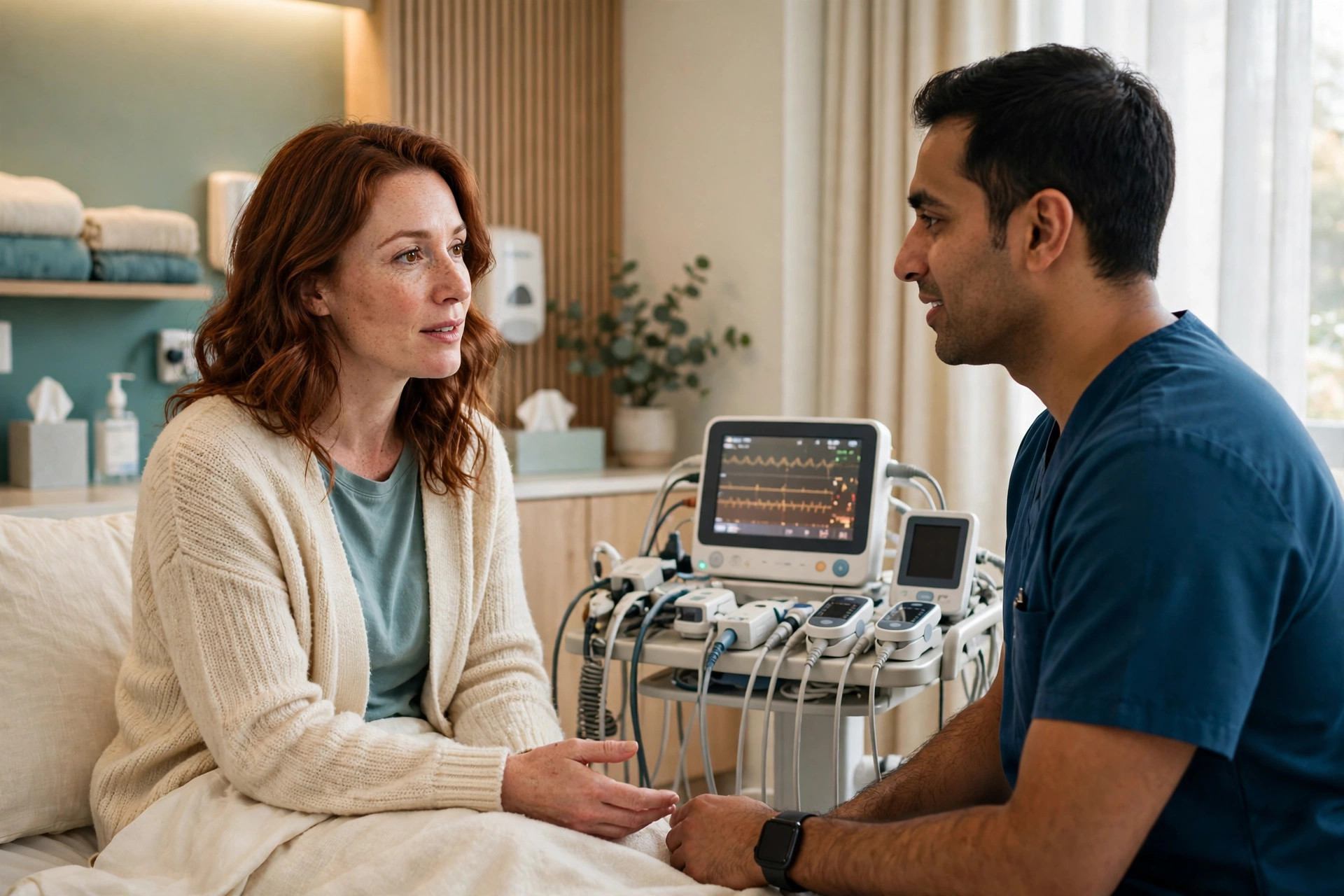
Day to day, fibromyalgia and sleep apnoea blur into one exhaustion with two authors, and fibromyalgia and sleep apnoea together explain mornings neither explains alone, and the tragedy is how completely the treatable author hides behind the untreatable-sounding one. People adapt their whole lives downward, fewer mornings, smaller ambitions, naps that do not work, caffeine systems with rules, while saying the sentence this article exists to retire: “It is just my fibromyalgia.” Sometimes it is. Sometimes a machine the size of a radio could give back a third of their life, and nobody has checked.
The driving stories concentrate the mind usefully. People describe microsleeps at lights, a rumble strip’s rude rescue, the decision to stop driving motorways made quietly and alone. These are not fibromyalgia fog stories; they are sleep-deprivation events with a mechanical cause and a mechanical fix, and they carry legal and moral weight the rest of the symptom list does not. If this paragraph is describing you, the appointment moves from the list to this week, and the driving pauses until it happens.
There is also a specific grief for partners, who lie awake counting pauses, doing arithmetic no one should do at 3 a.m. about someone else’s breathing. Their reports are clinical evidence of the first rank, and their exhaustion is real collateral. Sleep apnoea is a household condition wearing an individual’s diagnosis, which is why households, not just patients, celebrate when it is treated.
Fibromyalgia and Sleep Apnoea: Diagnosis and Treatment
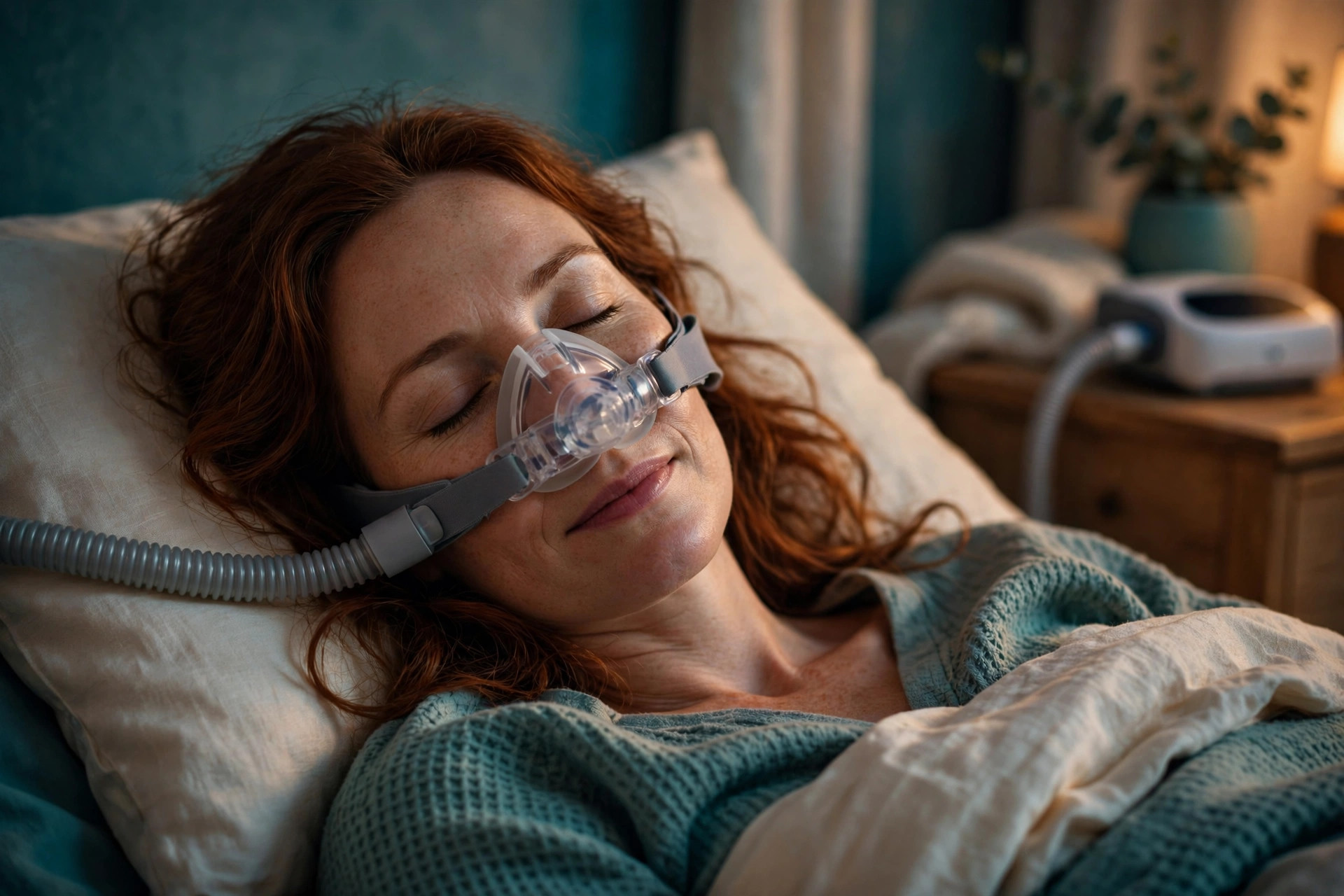
Diagnosis is simpler than its reputation. For people who suspect fibromyalgia and sleep apnoea, the pathway runs like this. Nothing here requires you to be brave about fibromyalgia and sleep apnoea, only systematic:
Bring the evidence to the appointment. The sign list above, a partner’s account or a phone recording of the snoring and pauses, plus your medicine list. The NHS sleep apnoea guide describes the same assessment route and the scoring questionnaires clinics use to triage.
Expect a home sleep study. Most diagnosis now happens with a kit worn at home for a night or two, sensors on finger, chest and nose, measuring pauses and oxygen. It is undramatic, and it produces a number, the apnoea-hypopnoea index, that turns suspicion into a treatment plan.
CPAP is the main treatment, and it deserves an honest paragraph. A bedside machine keeps the airway open with gentle air pressure through a mask. The first fortnight is an adjustment, mask fit is everything, and clinics iterate it with you. People who persist past the adjustment routinely describe the clearest mornings in years, and in fibromyalgia, pain and fatigue scores often follow the sleep down. Judge it at six weeks, not six nights.
The supporting cast matters too. Side-sleeping aids for back-dominant apnoea, weight management where relevant, alcohol removed from the evening entirely, and sedating medicines reviewed, because several directly worsen airway collapse. A dental appliance that holds the jaw forward helps a defined subset and is fitted, not bought off a shelf.
Record before you go. A free phone recording of one night’s snoring, pauses timed by a partner, and a fortnight of morning scores turns a vague complaint into a referral letter. People investigating fibromyalgia and sleep apnoea with that evidence in hand move through triage measurably faster, because fibromyalgia and sleep apnoea separate on data, not on how tired someone looks in a ten-minute slot.
Then watch the fibromyalgia recalibrate. Treating apnoea does not cure fibromyalgia, and honest articles say so. What it removes is an amplifier sitting on top of it: the oxygen dips, the shredded depth, the morning headaches. Many patients discover how much of their “fibromyalgia” was the amplifier, and that discovery, even at twenty percent, is a large gift.
Why This One Cannot Just Be Lived With
Most symptoms on this site are quality-of-life problems. Untreated fibromyalgia and sleep apnoea is also a cardiovascular one, the combination that earns fibromyalgia and sleep apnoea this article’s firmest tone. The nightly oxygen dips and strain are associated, over years, with high blood pressure that resists treatment, heart rhythm problems including atrial fibrillation, stroke, and type 2 diabetes, alongside the accident risk of sleepy driving. The NHS fibromyalgia overview covers your condition’s care, but this risk list belongs to the apnoea, and it is why this article’s tone about assessment is firmer than most: the test is easy, the treatment works, and the cost of the miss compounds silently.
The practical rule is simple. Loud nightly snoring plus unrefreshing sleep plus any witnessed pause deserves a sleep study conversation once, at whatever age, at whatever weight, without embarrassment. Nobody regrets a negative study. The regrets all live in the decades of untreated positives.
Quick Questions
Can you have sleep apnoea without being overweight or male?
Yes, and this misconception is the main reason women with fibromyalgia are diagnosed late. Jaw structure, neck anatomy, menopause-related changes and airway tone all produce apnoea in slim people and in women, whose presentation often leans towards insomnia, fatigue and morning headache rather than heroic snoring. If your picture matches the sign list, your demographics are not a defence, and the home study settles the question in two nights.
Will CPAP help my fibromyalgia pain?
It helps the portion of pain that broken, oxygen-dipping sleep was generating, which in untreated apnoea can be a substantial portion. Studies in people with both conditions show pain sensitivity and fatigue improving as sleep consolidates. The realistic expectation is a meaningful reduction in the total burden and much better mornings, not a cure, and many patients rate it among the highest-value interventions they have tried, usually after the mask-fit battles of the first month are won.
Can treating apnoea change my fibromyalgia treatment?
Sometimes, and it is one of the quiet satisfactions of this diagnosis. When sleep consolidates and oxygen steadies, some people find their pain and fatigue settle enough that medicine reviews can cautiously reduce doses that were compensating for the amplifier. Never adjust anything on the strength of good mornings alone; bring the sleep data to the review and let the prescriber share the decision. Sequencing is the point: fix the airway first, then re-measure everything else.
I tried CPAP and hated it. Is there anything else?
Yes, and abandoning the machine silently is the worst option on the menu. Mask refits, pressure adjustments, humidification and different mask styles fix most intolerance; beyond that sit dental appliances, positional therapy, weight programmes and, for defined anatomies, surgical options. Sleep clinics would rather iterate with you for months than discharge a treated-as-failed patient back to untreated risk, so take the hatred back to the clinic as data. It is literally what they are for.
Living with fibromyalgia and sleep apnoea means your airway has been editing your sleep, and your symptoms, in secret. Get the pauses witnessed, the study done, and the treatment fitted with patience, and let the fibromyalgia that remains introduce itself honestly, at its true, smaller size. If you are still building your wider plan, our first-year roadmap is a steady place to continue.
This article is for general information and education only and is not medical advice. Witnessed breathing pauses in sleep, or sleepiness that affects driving, should be assessed promptly by a doctor.