Fibromyalgia and Period Pain: Why Flares Follow Your Cycle
If you live with fibromyalgia and period pain, your month has a weather system. In the days before your period the whole body turns: pain climbs everywhere at once, sleep thins, the fog thickens, and then the period itself arrives with cramps that radiate into your back, your hips and your thighs, on top of a flare already in progress. Two cycles, hormonal and fibromyalgic, are running in the same body, and they amplify each other on a timetable so regular you could set a calendar by it, because women do.
The connection is biochemical, not imagined. Oestrogen and progesterone modulate pain processing directly; their late-cycle fall lowers pain thresholds across the whole nervous system at exactly the moment the uterus releases prostaglandins, the inflammatory chemicals that drive cramping and also sensitise nerves well beyond the pelvis. Research consistently shows fibromyalgia symptoms peaking premenstrually and in the first days of bleeding, and period pain itself runs more severe in women whose pain systems are already sensitised.
This guide explains how fibromyalgia and period pain connect. First, you will learn why the cycle drives flares and what makes some periods significantly worse. Next, you will find the month-planning approach, treatment timing, cycle tracking, and the options worth discussing with a doctor. Finally, you will learn the period patterns that point to endometriosis, fibroids or other gynaecology that fibromyalgia must never be allowed to mask.
Table of Contents
- Why Fibromyalgia and Period Pain Come Together
- What Makes Some Cycles So Much Worse
- What It Feels Like Day to Day
- Fibromyalgia and Period Pain: Planning the Month Around Both
- Period Patterns That Are Not Fibromyalgia
- Quick Questions
Why Fibromyalgia and Period Pain Come Together
Start with the prostaglandins, the cycle’s loudest messengers, where fibromyalgia and period pain chemically begin. Released as the womb lining breaks down, they contract the uterus, inflame the neighbourhood, and in a centralised pain system they do not stay local: back ache, hip and thigh pain, bowel urgency and diarrhoea, nausea and headache all ride the same chemical wave, which is why period days so faithfully reproduce a mini-flare’s full symptom list. Our fibromyalgia and pelvic pain guide maps the pelvic end of this territory in depth, including the endometriosis overlap flagged again below.
Then the hormone fall primes the amplifier in advance. In the late luteal days, dropping oestrogen reduces the nervous system’s own pain dampening, sleep fragments, mood and stress chemistry shift, and the migraine-prone get their monthly appointment too. By the time bleeding starts, the fibromyalgia system is already turned up; the period then performs on a stage set for it. This is why the flare so often begins before the period does, a sequence patients report for years before anyone explains the two-act structure to them.
The pattern often announces itself young, years before any fibromyalgia label. Teenagers and students with the worst periods, the missed school days, the pain dismissed as low tolerance, disproportionately populate later fibromyalgia clinics, because early severe period pain is now understood as a marker of a sensitising pain system, not a character reference. If that was your history, it belongs in your medical story told whole: the cycle was never a side plot in this condition; for many women it was the first chapter.
Blood loss writes the final line for heavy bleeders. Monthly iron loss accumulates into the low ferritin that our iron and ferritin guide links to profound fatigue, restless legs and worsened pain, a fully testable, treatable contributor hiding inside “just periods.” And as the NHS period pain guide sets out, ordinary primary period pain is common and manageable; the fibromyalgia version is ordinary pain chemistry arriving in an extraordinary amplifier, which is a different experience and deserves to be treated as one.
What Makes Some Cycles So Much Worse
Not every cycle lands equally, and the variation itself is diagnostic information. In fibromyalgia and period pain, the worst months usually have accomplices:
The stress month. A brutal month at work or home lowers thresholds before the hormones move, so the same cycle chemistry produces a worse flare. Two amplifiers multiply rather than add.
The poor-sleep run-up. Late-cycle insomnia is hormonal; a week of it before bleeding pre-loads the flare. Protecting sleep in that window pays out of all proportion.
Heavy bleeding months. More prostaglandin, more pain, more iron lost, more fatigue for the following fortnight. Heaviness is treatable and worth reporting in soaked-products-per-day language, not adjectives.
The contraception change. Starting, stopping or switching hormonal contraception rewrites the cycle’s chemistry for two to three months; flares that date to a switch are data for the review, not a mystery.
The approaching menopause. Perimenopausal cycles grow erratic and often heavier before they space out, and our menopause and fibromyalgia guide covers why symptoms spike in these years. A worsening pattern in your forties is a chapter change, not a personal failure.
Undiagnosed gynaecology joining in. Endometriosis, adenomyosis and fibroids all escalate period pain on their own schedules, and their early years are exactly when “it’s your fibromyalgia” does its worst damage. The red-flag section below exists for this reason.
Keep the variation in view for one practical reason: a cycle that breaks the pattern, dramatically worse, differently timed, differently heavy, has left the territory of amplification and entered the territory of new information. In a condition where everything is usually blamed on the old diagnosis, pattern-breaks are the signal worth protecting with both hands.
What It Feels Like Day to Day

Day to day, fibromyalgia and period pain reorganise a life into cycle-aware planning, because fibromyalgia and period pain together claim a quarter of every month that nobody teaches. Big presentations, travel, house moves and hard conversations get silently scheduled into the good fortnight, while the bad days absorb the cancellations, the sick calls and the apologies. Women describe two professional lives run in alternation, and the guilt of the unreliable one, in jobs that have never heard of either condition, let alone their monthly merger.
School and university write the earliest version of the ledger: exams that land in the red zone by pure calendar cruelty, attendance records that look like attitude, first jobs where the pattern is still a secret being kept from employers who have not earned it yet. The planning skills this article teaches are, for younger women, the difference between a condition that quietly edits their CV and one that is merely scheduled. Education settings accommodate predicted patterns far better than unexplained absences, which is the diary’s first dividend.
The intimacy and family ledger runs parallel: a quarter of every month discounted by pain, bleeding management and exhaustion, partners learning the calendar’s red zones, children meeting two versions of their mother’s capacity. Naming the pattern at home, as a timetable rather than a mood, is one of the most consistently reported reliefs in this whole territory, because a predicted hard week can be planned around, staffed and forgiven in advance, while an unexplained one just looks like failure recurring monthly.
Fibromyalgia and Period Pain: Planning the Month Around Both

The cycle is the most predictable flare trigger you own, which makes it the most plannable. For people managing fibromyalgia and period pain, the programme that works is below. With fibromyalgia and period pain, prediction is half the treatment:
Track two cycles of everything. Bleeding, pain scores, sleep, bowel, mood, in one diary or app. Two months of that data separates your true pattern from the average article’s, times your worst window to the day, and converts every later appointment from anecdote to evidence.
Time anti-inflammatories like medicine, because they are. NSAIDs work on period pain by blocking prostaglandins, and they work best started just before or at the very start of bleeding, before the chemistry peaks, not rescued with at maximum pain. Agree the plan, dose and stomach protection with your clinician or pharmacist, especially alongside other medicines.
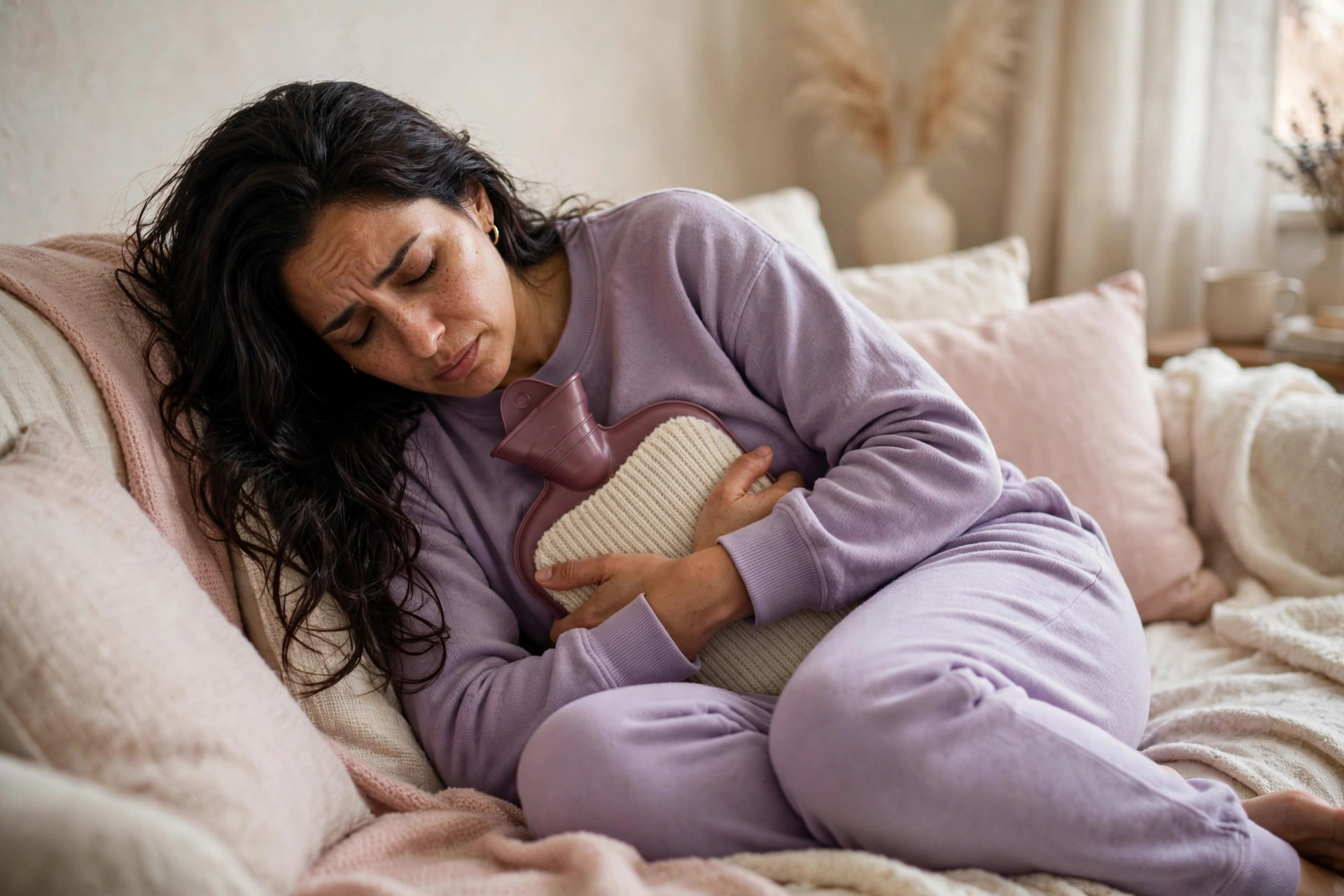
Heat is a drug here too. Heat pads and hot water bottles on the abdomen and back have trial evidence in period pain rivalling simple painkillers for some women, and they stack safely with every other item on this page. The pre-period week is when the heat kit gets staged, not searched for.
Pre-book the soft landing. Defend sleep in the late-cycle window, lighten the diary where life allows, batch the demanding tasks into your strong fortnight, and tell the relevant humans the timetable. Planning is not surrender; it is the same load-management logic as every other flare, with the unique luxury of a published schedule.
Discuss hormonal options as fibromyalgia treatment too. For many women, hormonal contraception that reduces or spaces periods, run continuously under advice, flattens the monthly flare cycle itself, a legitimate reason to raise it even when contraception is not needed. The conversation belongs with your doctor, weighing your risks and history, and the diary from step one is what makes it a short conversation.
Stage the period kit where life happens. Heat patches, timed painkillers, spare protection, dark clothing for the heavy days, at work, in the car, in your bag. People managing fibromyalgia and period pain with the kit pre-positioned stop losing the first hour of every flare to logistics, and fibromyalgia and period pain both punish the unmanaged first hour hardest.
Check the iron. Heavy periods plus fibromyalgia fatigue earns a ferritin test on evidence, not on request-begging. Treating the iron treats the fortnight after the period as well as the period, which is why this item closes the programme rather than opening it: it is the one most often missed entirely.
Period Patterns That Are Not Fibromyalgia
Most fibromyalgia and period pain is primary pain in an amplified system. Nevertheless, get gynaecological assessment if you notice:
- Pain that is worsening year by year, or that changed character in your thirties or forties
- Pain with sex, pain with bowel movements during periods, or pain that continues well beyond bleeding days
- Very heavy bleeding: soaking through protection hourly, large clots, flooding, or periods beyond seven days
- Bleeding between periods, after sex, or any bleeding after menopause, which is always assessed promptly
- Difficulty conceiving alongside significant period pain
- Fainting, shoulder-tip pain or severe one-sided pelvic pain, which can be urgent
Assessment covers examination, bloods including ferritin, and ultrasound where indicated, with endometriosis sometimes needing specialist referral and time to confirm, a diagnostic delay this article wants shortened, not normalised. The NHS fibromyalgia overview explains how the referrals fit your wider care. Your fibromyalgia amplifies period pain; it is not a certificate that nothing else is happening in the pelvis.
Quick Questions
Why does my whole body flare, not just my pelvis?
Because the period’s chemistry is systemic. Prostaglandins circulate, oestrogen’s fall removes pain dampening everywhere, sleep fragments, and the sensitised central system receives the whole package at once. Back, hips, thighs, bowel, head and mood are not separate coincidences; they are one hormonal weather front crossing one sensitised landscape. This is also why whole-body strategies, sleep defence, timed anti-inflammatories, planned load, outperform pelvis-only remedies for most women with both conditions.
Should I exercise during the worst days?
Gently, if you can, and without moral pressure. Movement measurably eases period pain for many women, through circulation, endorphins and prostaglandin clearance, and walking, stretching and easy cycling are the usual formats. But the worst six hours are a legitimate exception in a condition already rationing energy, and the programme above treats the day as plannable rather than as a character test. Resume with the cycle; the fortnight after is where the training compounds.
Can hormonal contraception really help the fibromyalgia flares?
For a meaningful share of women, yes, by removing the trigger rather than treating the pain. If your diary shows flares locked to the cycle, flattening the hormonal swing, fewer periods, no hormone-free week, logically flattens the flare calendar, and clinicians do prescribe on exactly this reasoning. It is not suitable or desired for everyone, risks and preferences govern, and it never replaces the gynaecology checks above. But as a fibromyalgia intervention hiding in the contraception drawer, it is under-discussed.
Is it normal for periods to get worse with fibromyalgia as I age?
The fibromyalgia amplification can grow with the condition, and perimenopause genuinely worsens bleeding patterns for many women before periods stop, so a worsening in your forties has two common explanations. Neither is a reason to simply absorb it: worsening period pain at any age is on the assessment list above, heavy bleeding deserves its ferritin and its ultrasound, and the menopause chapter has its own treatments. “Normal for your age” is a sentence to accept only after the examination, never instead of it.
Living with fibromyalgia and period pain means your month has a forecast, and forecasts exist to be planned around. Track the pattern of your fibromyalgia and period pain, time the anti-inflammatories, stage the heat, defend the sleep, discuss the hormonal options with data in hand, check the iron, and let changing, heavy or invasive pain patterns have their gynaecological hearing. The flare will still come; it need never again arrive as an ambush. If you are still building your wider plan, our first-year roadmap is a steady place to continue.
This article is for general information and education only and is not medical advice. Very heavy bleeding, bleeding after menopause, or severe one-sided pelvic pain needs prompt medical assessment.