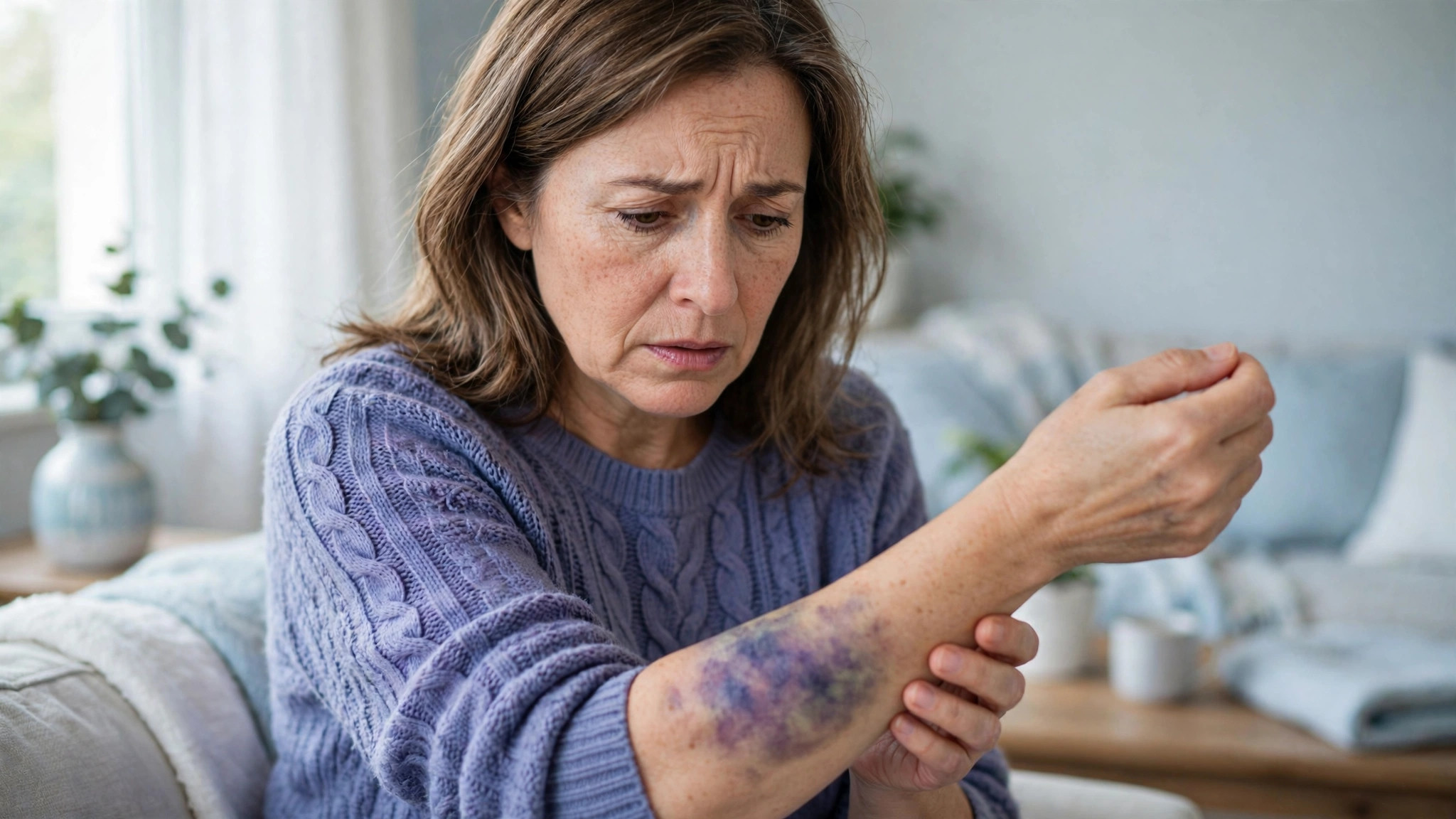
Fibromyalgia and Bruising: 7 Reasons You Bruise So Easily
If you live with fibromyalgia and bruising, your legs tell stories you do not remember. Purple blooms on your shins. A yellow-green patch on your thigh. Marks from knocks you swear never happened, fading slowly while new ones arrive uninvited.
Easy bruising rarely makes the official fibromyalgia symptom lists. However, ask any patient group and the photographs come out: arms and legs mapped with mystery marks. Some of it is genuinely more bruising. Some of it is bruising that hurts and lingers more, thanks to a nervous system that amplifies everything it touches. Both deserve an explanation.
This guide explains how fibromyalgia and bruising connect. First, you will learn the seven main reasons you bruise so easily. Next, you will find what helps bruises heal and appear less often. Finally, you will learn the bruising patterns that are never safe to blame on fibromyalgia, because they need real investigation.
Table of Contents
- Why Fibromyalgia and Bruising Come Together
- 7 Reasons You Bruise So Easily
- What It Feels Like Day to Day
- Things That Make Bruising Worse
- Fibromyalgia and Bruising: Helping Bruises Heal Faster
- When Bruising Needs Investigating
- Quick Questions
Why Fibromyalgia and Bruising Come Together
A bruise is blood that escaped from tiny vessels after a knock and pooled under the skin. Everyone bruises. The fibromyalgia difference works on both sides of the event: the knock and the noticing. On one side, fragile vessels, certain medicines and low nutrient levels let more blood escape from smaller knocks. On the other side, clumsiness from fatigue and fog means the knocks happen more often, and pain amplification means you feel every bruise far more than its size deserves.
There is also a memory trick at work. Fibro fog eats small events. The coffee-table corner you clipped on Tuesday is genuinely forgotten by Thursday, when its bruise blooms. The knock was real; the remembering failed. That is why so many of these bruises feel unexplained when they are merely unrecorded.
Balance deserves a sentence of its own. Dizziness, weak legs and foggy reaction times all raise collision rates, and they are fibromyalgia staples. Nobody bruises in a padded world; they bruise in a real one, moving through it tired. Anything that steadies the movement, from better sleep to a walking aid on bad days, is quietly bruise prevention too.
Finally, vitamin and mineral gaps common in this condition matter here. Low iron affects blood health generally, as our guide to iron, ferritin and fibromyalgia fatigue explains, and vitamin C and K both play roles in vessel strength and clotting. Fibromyalgia and bruising meet, in other words, at several crossroads at once.
7 Reasons You Bruise So Easily
Most people with fibromyalgia and bruising have several of these at work.
1. More knocks, honestly earned. Fatigue, fog and poor balance steer you into door frames, table corners and bedposts. More collisions means more bruises, no mystery required.
2. Fragile small vessels. Ageing skin, sun history and low-grade inflammation all thin the support around capillaries, so small knocks leak more.
3. Medicines that thin the blood. Anti-inflammatory painkillers, some antidepressants and blood thinners all raise bruising. Many fibromyalgia medicine cabinets hold at least one of these, and combinations multiply the effect.
4. Vitamin gaps. Vitamin C, vitamin K, B12 and iron all feed vessel and blood health. Our guide to vitamin B12 and fibromyalgia covers the deficiency signs people miss most often.
5. Pain amplification. The bruise itself may be ordinary, but a sensitised nervous system reports it loudly and for longer. Part of bruising more is hurting more from the same marks.
6. Alcohol. Even modest drinking thins blood temporarily and worsens balance and sleep. Weekend bruises often have a simple author.
7. Thin, dry skin. Skin that tears and marks easily goes with territory that includes itching and sensitivity, and it shows every knock in high definition.
Seven causes, and notice how unglamorous they are: collisions, capillaries, capsules and cooking. That is good news disguised as a dull list. Unglamorous causes have practical fixes, and most people can improve three of the seven this month without a single new prescription.
What It Feels Like Day to Day

Day to day, fibromyalgia and bruising add a visual noise to life with an invisible illness. Shorts weather becomes a decision. Swimming invites questions. Well-meaning people ask what happened, and “I honestly don’t know” sounds like a cover story even to your own ears. Some people find themselves pre-emptively explaining, which is its own small exhaustion.
There is a serious shadow here worth naming once. Unexplained bruises can raise concerns about safety at home, from clinicians or family, and that can feel insulting and frightening at once. A calm record, photos with dates and a note of remembered knocks, protects everyone: it shows the pattern, supports the medical conversation and takes the mystery out of the marks.
Children ask about bruises with a child’s honesty, and a simple answer keeps it ordinary: my body marks easily and the marks look worse than they feel. Treating the question calmly at home stops the marks becoming dramatic or secret, and it models the exact tone you want from every adult who notices them later.
Practically, bruises also hurt in fibromyalgia more than they should, and tender marks on shins and forearms get knocked again precisely because they sit where life happens. Padding the world slightly, as the strategies below describe, is not fussiness. It is pain management with better PR.
Things That Make Bruising Worse
Bruising follows patterns once you track it, and fibromyalgia and bruising aggravators overlap heavily with flare triggers. The common aggravators include:
- High-knock days. Moving furniture, gardening, playing with grandchildren, DIY: the fun stuff is collision-rich.
- New medicines. Any new painkiller, antidepressant or supplement, including fish oil and ginkgo, can shift bruising within weeks.
- Sun-weakened skin. Long-unprotected summers thin the skin on forearms and shins permanently.
- Rushing while foggy. The classic fibromyalgia accident recipe: tired brain, fast feet, hard furniture.
- Hot showers and heat. Heat widens vessels, and fresh knocks leak more into warm tissue.
- Low appetite weeks. Vitamin intake drops exactly when pain and knocks rise.
A dated photo whenever a notable bruise appears, with one line about the day, builds the pattern faster than any memory exercise. Bring the photos to appointments; they speak clearly.
Fibromyalgia and Bruising: Helping Bruises Heal Faster
You cannot un-knock a shin. However, good first aid and a few habits make bruises smaller, shorter and less frequent for people managing fibromyalgia and bruising. The order matters: prevention first, first aid second, and investigation whenever the pattern breaks its own rules, which is how fibromyalgia and bruising stay a nuisance rather than becoming a mystery.
Cold, early, briefly. A cold pack wrapped in cloth, ten minutes at a time in the first day, limits how much blood escapes. It is the single highest-value move, and it also numbs the amplification nicely.
Elevate and rest the area. A bruised leg on cushions leaks less and throbs less. This pairs with the elevation habits in our guide to fibromyalgia and swelling, because fluid and bruising follow the same gravity.
Then warmth, after two days. Once the leak has stopped, gentle warmth encourages circulation to clear the pooled blood. Timing matters: warm too early and you feed the bruise.
Feed the repair crew. Protein, vitamin C from fruit and vegetables, and leafy greens for vitamin K. The Versus Arthritis fibromyalgia guide covers the wider eating-well basics that support tissue repair. Supplements only help when a gap exists, so test before spending.
Pad the collision course. Corner guards on the coffee table, a night light for the bedroom route, shin awareness during foggy chores. Slightly slower movement on bad days prevents more bruises than any cream.
Protect thin skin daily. Sunscreen on forearms, long sleeves for gardening, and moisturiser for dry shins all rebuild the padding that vessels need. Skin is the bruise’s first editor: the stronger it is, the smaller the story it lets through. For people living with fibromyalgia and bruising, boring skin care quietly outperforms most remedies sold for the marks themselves.
Review the medicine list once a year. Ask specifically: does anything here raise bruising, and do I still need all of it? Never stop a prescribed thinner on your own; ask, and let the prescriber balance the risks.
When Bruising Needs Investigating

Most fibromyalgia and bruising is benign and explainable. Nevertheless, some patterns signal blood, liver or vessel problems that need proper investigation. Book an appointment, promptly, if you notice:
- Large bruises appearing with no knock at all, repeatedly
- Bruising with bleeding gums, nosebleeds that are hard to stop, or blood in urine or stools
- Bruises mainly on the back, chest or face, places that rarely get knocked
- A bruise that keeps growing, or a hard painful lump under one
- Bruising that starts suddenly after a new medicine, alongside feeling unwell
- Bruising with unusual fatigue, pallor, fever or weight loss
A doctor will usually examine the pattern and run a full blood count, clotting and liver checks, plus iron, B12 and thyroid where relevant. The NHS fibromyalgia overview explains how these checks fit the wider assessment. Bring your dated photos and your full medicine and supplement list; both genuinely change what gets tested.
Quick Questions
Can fibromyalgia itself cause easy bruising?
Partly directly and mostly indirectly. The condition brings more knocks through fatigue and fog, more vessel fragility through inflammation, more bruise-amplifying medicines, and far more pain from each mark. Together, fibromyalgia and bruising form a very common pair, even though fibromyalgia alone is rarely the whole story.
Why do my bruises take so long to fade?
Slower circulation, repeated small knocks to the same spots and low nutrient levels all slow the clean-up. Two to three weeks for a deep shin bruise is common and usually harmless. A bruise that grows instead of fading, or stays hard and painful, deserves a look.
How can I tell an ordinary bruise from a worrying one?
Ordinary bruises follow a knock, even a forgotten one, sit where life collides, and fade through colour changes over two to three weeks. Worrying ones arrive unprovoked, gather in odd places, bring bleeding elsewhere, or grow instead of fading. When fibromyalgia and bruising break those ordinary rules, that is the signal to stop explaining and start testing.
Do arnica or vitamin creams work?
Evidence is modest at best. They rarely harm, and the gentle massage of applying them may ease the tenderness. Spend your effort first on cold packs, elevation, food and the medicine review, where the real returns live, and treat creams as comfort rather than cure.
One mindset shift makes all of this easier: treat bruises as data, not drama. A dated photo takes ten seconds and converts worry into information. People with fibromyalgia and bruising who keep that tiny habit stop re-litigating every new mark at 2 a.m., because the record answers for them. Calm record-keeping is the unglamorous superpower behind most good outcomes in fibromyalgia and bruising.
Living with fibromyalgia and bruising means reading your own skin like a diary you do not remember writing. Photograph the marks, feed the repair crew, pad the furniture, and investigate the patterns that break the rules. Most people who do this bruise less, worry less and stop apologising for their own legs. If you are still building your wider plan, our first-year roadmap is a steady place to continue.
This article is for general information and education only and is not medical advice. Bruising with unusual bleeding, bruises in un-knocked places, or a growing painful lump under a bruise should always be assessed by a doctor.